
STOP LOSING NITROGEN YOU ALREADY PAID FOR

Demonstrating the Impact of Excelis Maxx on Wheat

Objective

We ran a side by side field test to answer a simple question: how much nitrogen are we actually losing? The objective was to quantify the amount of nitrogen lost to volatilization with and without the use of Excelis Maxx in field conditions.

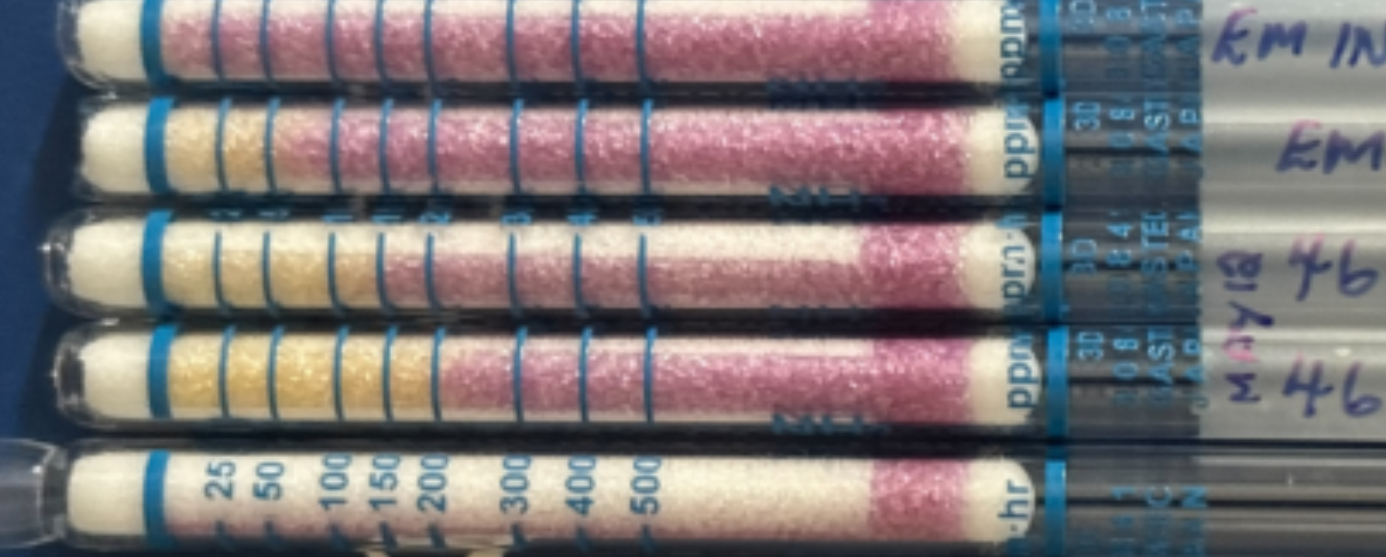
Over 18 days, we tracked losses using dosi tubes – comparing treated vs untreated soil. The difference wasn’t small.

Methodology & Results

A field demonstration was conducted near Alexander, Manitoba, during the 2025 growing season to evaluate the performance of Excelis Maxx on spring wheat. The field was seeded on May 7th, 2025, with nitrogen banded into the soil at seeding. 

The trial site was divided into two treatments: nitrogen treated with Excelis Maxx and an untreated nitrogen control. All other agronomic practices were kept consistent across the field to isolate the impact of the treatment. Over a 30-day period, readings were collected, and dosimeter tubes were replaced for new ones every 48-72 hours. 

The wheat crop was harvested on September 3rd, 2025. At harvest, the Excelis Maxx-treated area delivered a yield advantage of 4 bushels per acre compared to the untreated control. 

nitrogen volatilization,nitrogen loss in soil,Excelis Maxx,fertilizer volatilization,nitrogen efficiency in wheat,spring wheat nitrogen management,reduce nitrogen loss,urea volatilization,treated vs untreated,manitoba agriculture research,prairie wheat fertility,field demonstration,field study,dosi tubes,manitoba field study

Key Findings 

nitrogen volatilization,nitrogen loss in soil,Excelis Maxx,fertilizer volatilization,nitrogen efficiency in wheat,spring wheat nitrogen management,reduce nitrogen loss,urea volatilization,treated vs untreated,manitoba agriculture research,prairie wheat fertility,field demonstration,field study,dosi tubes,manitoba field study
ex max bar graph
case study alexander wheat (9)
The tube color changes from purple to yellow in the presence of NH3 - indicative of volatilization.

Conclusion

At the end of the 30-day period, nitrogen loss measured 4:1 in favor of the Excelis Maxx treated acres by reducing volatilization. The increased availability of nitrogen contributed to the 4 bu/ac gain over the untreated acres. These results demonstrate the value of protecting and enhancing nitrogen performance, translating into the measurable yield gain under real field conditions. 

nitrogen volatilization,nitrogen loss in soil,Excelis Maxx,fertilizer volatilization,nitrogen efficiency in wheat,spring wheat nitrogen management,reduce nitrogen loss,urea volatilization,treated vs untreated,manitoba agriculture research,prairie wheat fertility,field demonstration,field study,dosi tubes,manitoba field study
Share this post
Facebook
Twitter
LinkedIn